
When Engineers Write Poems
“A professor at the MIT discovered that his students were quietly meeting outside class to write verse. What might it mean for the future of AI?” ,
In an era of rapid advancements in artificial intelligence (AI), the question often arises: what remains the significance of human creativity? Joshua Bennett’s recent essay offers a fresh perspective by narrating the story of a secret poetry collective at MIT. These students, deeply immersed in engineering and science, chose to gather outside the classroom to write poetry and critique one another’s work.
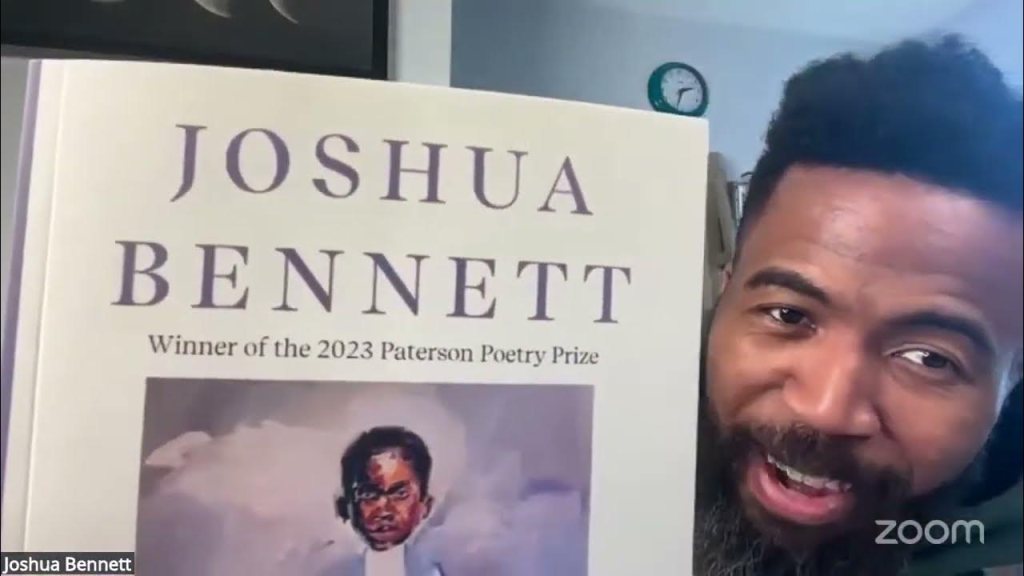
According to Bennett, despite their heavy academic workload, these students turn to poetry as a way of engaging with their emotions and creativity. This highlights the fact that the human mind cannot be reduced to data and formulas alone—it also seeks meaning, memory, and relationships.
The article emphasizes that poetry preserves both personal feelings and collective memory. Citing Horace, Bennett notes that heroes uncelebrated in verse fade into oblivion—poetry, therefore, becomes a “technology of memory.”
Bennett argues that AI is essentially a “prediction machine,” producing text based on probabilities. A poem, on the other hand, thrives on originality and surprise. While AI imitates, poetry creates.
The article also suggests that our fascination with both AI and poetry stems from the same human longing—for connection, astonishment, and meaning. Yet poetry achieves this through lived experience, while AI does so mechanically.
Bennett highlights student projects as proof of this intersection: Melia, a device blending human voices with natural sounds via a neural net; digital collages transforming Nikki Giovanni’s poem into visual art; and Songbirds, a program that preserves hospice patients’ memories through music and verse. These projects show how science and art can co-exist in the service of human life.
These observations reveal that technology and art are not opposites but complements. AI offers speed and calculation, while poetry sustains emotional truth and creative wonder. Looking ahead, the crucial question is whether AI will remain merely a tool of optimization, or evolve into a medium that deepens human experience.
Conclusion
Bennett’s essay reminds us that poetry is not just a tradition of the past but also a vital participant in debates about the future. It demonstrates that human creativity is irreplaceable. Even in the age of AI, poetry stands as living proof that human beings are more than machines—they are dreamers, feelers, and storytellers.


